
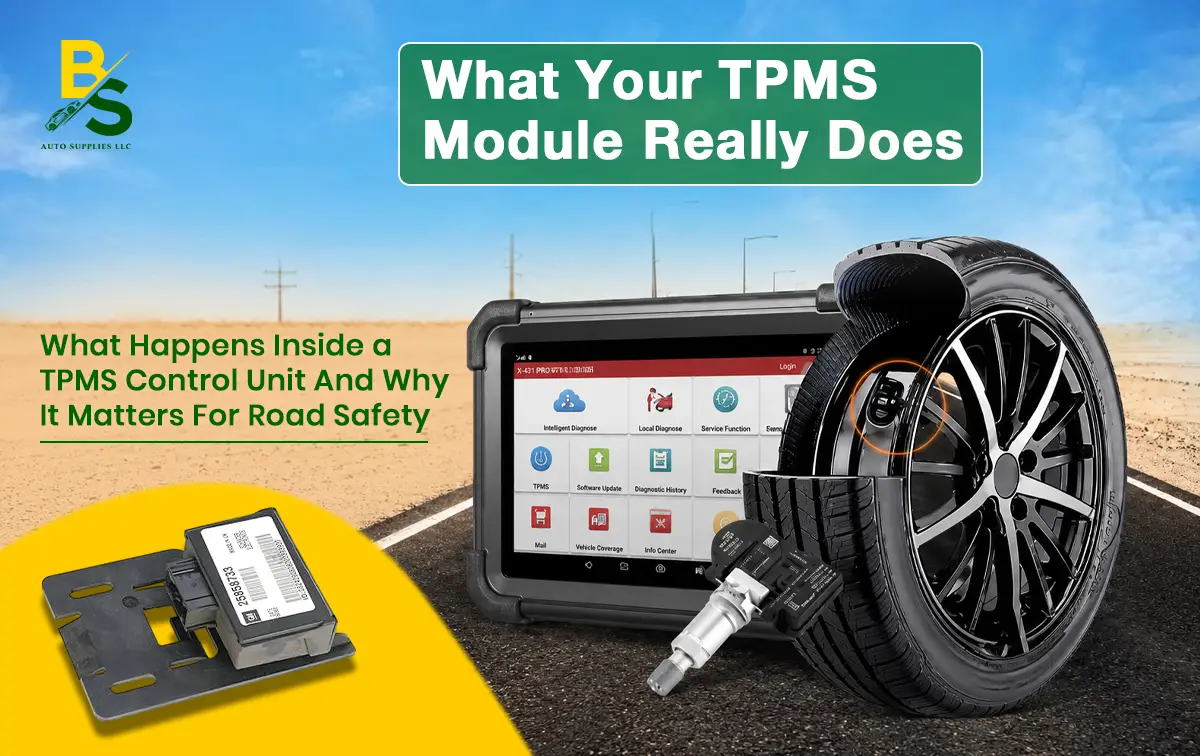
Modern vehicles rely on advanced electronic systems to improve safety, performance, and driving comfort. One of the most important yet often overlooked components is the Tire Pressure Monitoring System Control Unit . This smart device works behind the scenes to monitor tire pressure, alert drivers about potential issues, and help prevent dangerous road accidents.
At BS Auto Supplies LLC , drivers and automotive professionals understand the importance of maintaining a reliable tire pressure monitoring system for both passenger and commercial vehicles.
Understanding the Tire Pressure Monitoring System Control Unit
A Tire Pressure Monitoring System Control Unit is the brain of the TPMS setup in a vehicle. It receives signals from tire pressure sensors installed inside each wheel and analyzes the data in real time. If tire pressure drops below the recommended level, the system instantly sends a warning to the dashboard.
The control unit communicates with multiple components, including:
- Tire pressure sensors
- Wheel speed sensors
- Vehicle ECU systems
- Dashboard warning displays
Whether it is a passenger car or a heavy duty truck, the TPMS control module plays a critical role in ensuring accurate monitoring and fast alerts.
What Happens Inside the TPMS Control Module?
Inside the car TPMS unit , sophisticated electronics process wireless signals transmitted from tire sensors. The module continuously compares tire pressure readings against manufacturer set thresholds.
Here is what the process typically looks like:
1. Sensor Signal Reception
Each tire contains a pressure sensor that measures air pressure and temperature. These sensors send radio frequency signals to the vehicle tire sensor controller .
2. Data Processing
The automotive TPMS ECU interprets the incoming data and determines whether the readings are within safe operating limits.
3. Fault Detection
If one or more tires are underinflated or overinflated, the control unit identifies the issue immediately.
4. Driver Alerts
The system activates the TPMS warning light on the dashboard, helping drivers take corrective action before a tire failure occurs.
This entire process happens within seconds and continues throughout the drive.
Why the TPMS Control Unit Matters for Road Safety
A malfunctioning tire can lead to reduced fuel efficiency, uneven tire wear, poor braking performance, and even dangerous blowouts. The truck TPMS module and passenger vehicle systems are designed to reduce these risks significantly.
Improved Tire Safety
Proper tire pressure helps maintain optimal traction and stability, especially during emergency braking or wet road conditions.
Better Fuel Efficiency
Underinflated tires create rolling resistance, causing vehicles to consume more fuel. A properly functioning Tire Pressure Monitoring System Control Unit helps drivers maintain efficient tire pressure levels.
Reduced Tire Wear
Correct inflation extends tire lifespan and reduces maintenance costs.
Enhanced Driver Awareness
The TPMS system provides real time alerts, allowing drivers to fix pressure problems before they become serious safety hazards.
Signs of a Failing TPMS Control Module
Like any electronic component, a TPMS control module can fail over time. Common warning signs include:
- TPMS warning light staying on permanently
- Incorrect tire pressure readings
- Intermittent dashboard alerts
- Failure to detect tire sensors
- Communication errors with the vehicle ECU
If these issues occur, replacing the faulty module quickly is essential.
Choosing the Right Replacement TPMS Control Unit
When shopping for a replacement TPMS control unit USA , compatibility and quality are extremely important. Vehicle make, model, and year must match the module specifications to ensure proper communication with tire sensors and onboard electronics.
BS Auto Supplies LLC offers dependable automotive electronic solutions designed to support reliable TPMS performance for various vehicle types.
Final Thoughts
The Tire Pressure Monitoring System Control Unit is far more than a simple warning device. It is an intelligent safety component that protects drivers, improves vehicle performance, and reduces the risk of tire related accidents.
From processing sensor data to delivering instant alerts, the car TPMS unit serves as a critical part of modern automotive safety technology. Regular maintenance and timely replacement of faulty TPMS components can make a significant difference in both road safety and driving efficiency.





0 Comments